
Starting solids is one of the most exciting milestones in your baby’s first year. Parents often ask me: What should I give first? Should I do purées, or jump straight into finger foods? The good news is—there isn’t one “right” way. Whether you’re beginning with spoon-fed purées or trying baby-led weaning (BLW), what matters most is offering safe, nutrient-rich foods that support your baby’s growth and development.
As a dietitian (and a mom!), I’ve put together this guide to help you feel confident when choosing those all-important first bites.
IS MY BABY READY FOR SOLIDS?
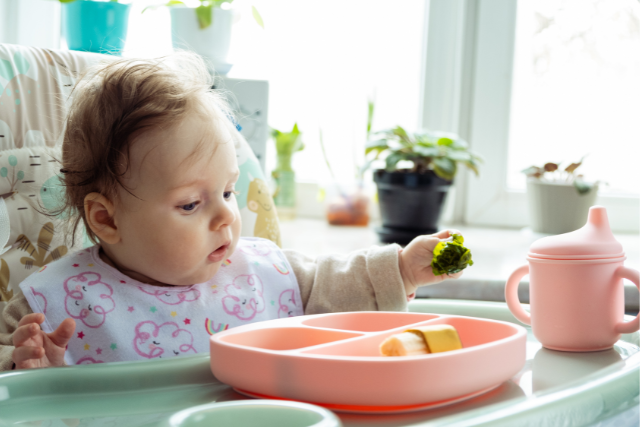
Most babies are developmentally ready around 6 months, but age alone isn’t enough. Look for these readiness signs:
- Baby can hold their head steady and sit with little or no support.
- They show interest in food – watching you eat or reaching for your plate.
- They’ve lost the tongue-thrust reflex (food doesn’t just push straight back out).
- They can grasp small objects or food and bring it to their mouth.
If your baby shows these signs, you’re ready to start exploring solid foods!
WHAT NUTRIENTS DO BABIES NEED MOST?
In the first year, breastmilk or formula is still the primary source of nutrition, but solids play an important role in filling key nutrient gaps. The nutrients I prioritize when recommending first foods are:
- Iron: crucial for brain development and energy (needs rise sharply around 6 months).
- Zinc: supports immune function and growth.
- Calcium & Vitamin D: build strong bones.
- Choline & Selenium: important for brain development and antioxidant defense.
That’s why I often recommend starting with iron-rich, energy-dense foods rather than only fruits and vegetables.
PUREES VS. BABY-LED WEANING: WHICH IS BETTER?
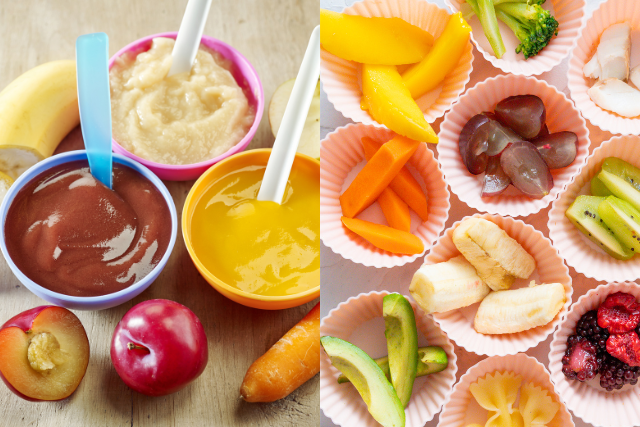
- Traditional Weaning (TW) starts with smooth purées, then progresses to mashed, then soft finger foods.
- Baby-Led Weaning (BLW) skips purées, offering safe, graspable pieces of food from the start. Baby self-feeds and learns to explore textures, tastes, and independence.
Many families use a combination approach, and that’s perfectly okay! What matters is that your baby is exposed to a variety of flavors and textures, while staying safe and supported.
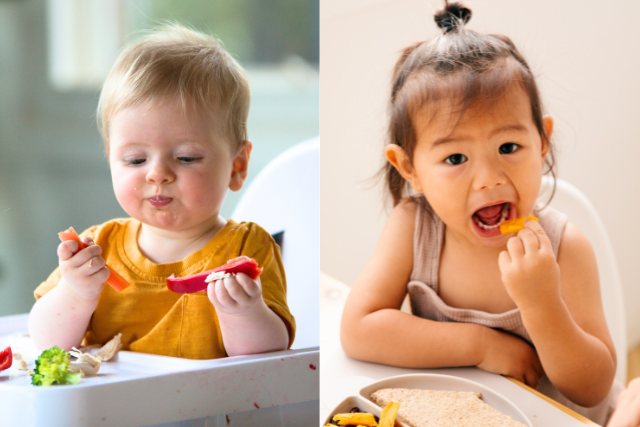
PALM GRASP VS. PINCER GRASP
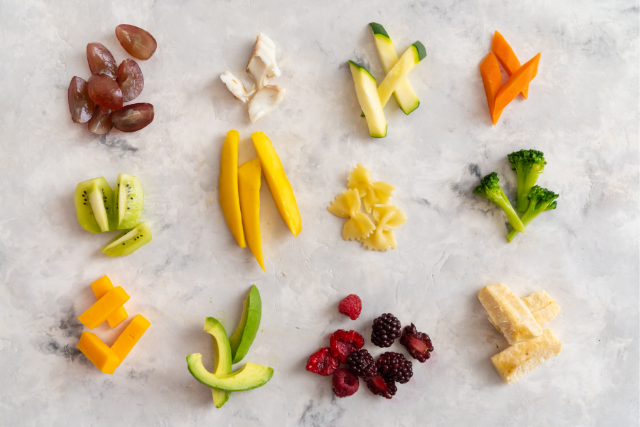
At the start, babies use a palmar grasp (whole hand) to pick up food, so larger pieces (like avocado spears or broccoli florets) are easier for them to handle. By 9–12 months, they develop a pincer grasp (thumb and forefinger), allowing them to pick up smaller foods like beans or blueberries. Offering foods in appropriate sizes helps your baby practice motor skills while staying safe.
20 BEST STARTER FOOD FOR BABIES
Here’s a list of versatile, nutrient-packed options that can be offered as purées, mashed, or BLW-style finger foods.
Iron & Zinc-Rich Foods
- Beef: slow-cooked strips (BLW) or puréed with broth.
- Lamb: tender meatballs or shredded.
- Chicken or turkey: shredded thigh meat or puréed with veggie stock.
- Egg yolk: scrambled strips or mashed with breastmilk/formula.
- Lentils: soft and mashed, or patties for BLW.
- Beans (black beans, kidney beans): mashed or shaped into soft patties.
- Salmon: flaked, boneless, cooked until soft.
- Sardines: mashed onto toast fingers.
- Tofu: soft cubes or blended with avocado.
- Iron-fortified baby oatmeal: thinned with breastmilk/formula.
Healthy Fats & Energy Foods
- Avocado: mashed or cut into spears (with peel left partly on for grip).
- Nut butters (peanut, almond): thinned and spread thinly on toast or mixed into purées (safe introduction for allergy prevention).
- Full-fat yogurt: plain, unsweetened.
- Cheese: soft strips of mild cheese (e.g., mozzarella).
Fruits & Vegetables (for vitamins, variety & fiber)
- Sweet potato: roasted wedges or mashed.
- Pumpkin: soft cubes or purée.
- Carrots: steamed sticks until very soft.
- Broccoli: steamed florets (great BLW finger food!).
- Banana: mashed or in “sticks.”
- Pear: ripe, peeled, soft slices or purée.
BOTTOM LINE
Starting solids is a joyful milestone, but it can feel overwhelming to decide what’s “best.” Whether you choose purées, baby-led weaning, or a mix of both, the most important thing is to focus on nutrient-rich, safe, and varied foods. Prioritize iron-rich foods from the start, introduce different textures and flavors early, and let your baby explore at their own pace.
Remember solids are about learning, not perfection. Keep mealtimes relaxed, offer family foods when possible, and always supervise closely. With variety, patience, and a positive environment, you’ll be setting the foundation for a healthy relationship with food.